Top 10 Benefits of Gabion Boxes for Civil Engineering & Infrastructure Projects (2026 Sourcing Guide)
Last Updated: February 26, 2026
Top 10 Benefits of Gabion Boxes for Civil Engineering & Infrastructure Projects (2026 Sourcing Guide)
The Quick Answer:
Gabion boxes provide a 30–40% cost reduction compared to reinforced concrete by eliminating formwork, curing time, and complex drainage pipes.
Their primary engineering benefits include immediate permeability to relieve hydrostatic pressure, flexibility to withstand ground settlement without cracking, and a service life exceeding 60 years when using Galfan (Zn-Al) coatings.

Introduction
For civil engineers and procurement managers, the choice of retaining structure isn’t just about the initial price—it’s about long-term risk. While rigid concrete walls are prone to cracking under differential settlement, gabion systems are designed to flex and drain.
As infrastructure demands shift toward sustainability and speed, rigid methods are being replaced by flexible wire mesh solutions. Below are the top 10 technical and economic reasons to specify gabion boxes for your next project.
Executive Summary: The Shift from Rigid to Flexible Infrastructure
To understand the value of a gabion system, we first have to look at how traditional infrastructure fails. The historical approach to civil engineering has been to “fight” nature. We build rigid concrete gravity walls designed to resist the immense pressure of soil and water through sheer mass and stiffness.
The problem with rigidity is brittleness. When the ground beneath a concrete wall shifts—even slightly—the structure cannot adapt. It cracks. Once a crack forms, water infiltrates the reinforcement zone, corrosion begins, and the clock starts ticking toward a costly repair or total failure.
The Gabion Philosophy: Bending Without Breaking
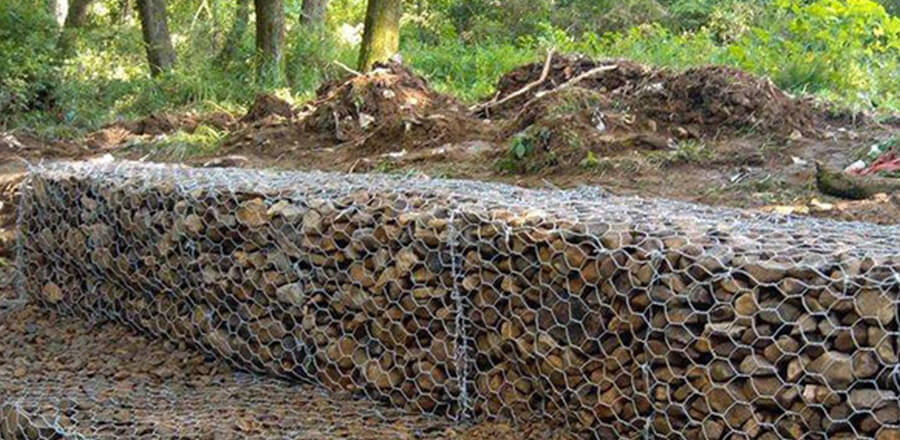
Gabion systems operate on a completely different principle. They are monolithic but flexible structures. A gabion wall is essentially a massive block of confined rock that acts as a single gravity unit. However, because it is held together by a double-twisted wire mesh, it can articulate. If the foundation settles, the wall settles with it. It deforms rather than cracks, maintaining its structural integrity and retaining function even under significant stress.
For a project manager, this translates to risk mitigation. You are no longer banking on the perfect performance of a rigid footing; you are installing a system designed to survive the imperfections of the real world.
But beyond the structural mechanics, the most immediate conversation we have with our clients revolves around the bottom line.
Cost & Sustainability Analysis for Your Project
When we analyze the cost of infrastructure, we often make the mistake of looking only at the “Ticket Price”—the cost of materials delivered to the site. If you compare a cubic meter of concrete against a cubic meter of gabion materials, the numbers are competitive. However, the true economic advantage of gabions reveals itself when you look at the Total Installed Cost.
Consider the auxiliary costs of a concrete wall: the excavation for deep footings, the lumber and labor for formwork, the rental of concrete pumps, the complex drainage piping required behind the wall, and the mandatory 28-day curing period before the structure can be backfilled and loaded.
Gabion systems eliminate almost all of these steps. There is no formwork. There is no curing time. Drainage is inherent to the product.

When you factor in the reduction in skilled labor and equipment time, the installed savings can range from 30% to 50% depending on the location. Furthermore, from a sustainability standpoint, gabions offer a significantly lower Global Warming Potential (GWP). By using locally sourced stone and removing cement—a major carbon emitter—from the equation, your project can meet increasingly strict environmental tender requirements.
With that economic framework in mind, let’s dive into the ten specific technical benefits that drive these savings.
The Top 10 Technical & Economic Benefits
1. Superior ROI: The Galfan Advantage Over Standard Galvanization
The first question most procurement teams ask is about longevity. “Will the wire rust?” It is a valid concern, but one that has been solved by advancements in coating technologies.
Historically, gabions were heavily galvanized with zinc. While effective, pure zinc coatings eventually succumb to oxidation, especially in aggressive environments. Today, the industry standard for high-performance infrastructure is Galfan, a specialized alloy coating composed of 95% Zinc and 5% Aluminum-Mischmetal.
The difference is not just chemical; it is structural. Galfan coatings possess a tighter crystalline structure than pure zinc, which makes them far more resistant to abrasion and corrosion. In salt spray testing, Galfan-coated wires often last two to three times longer than traditional galvanized wires.
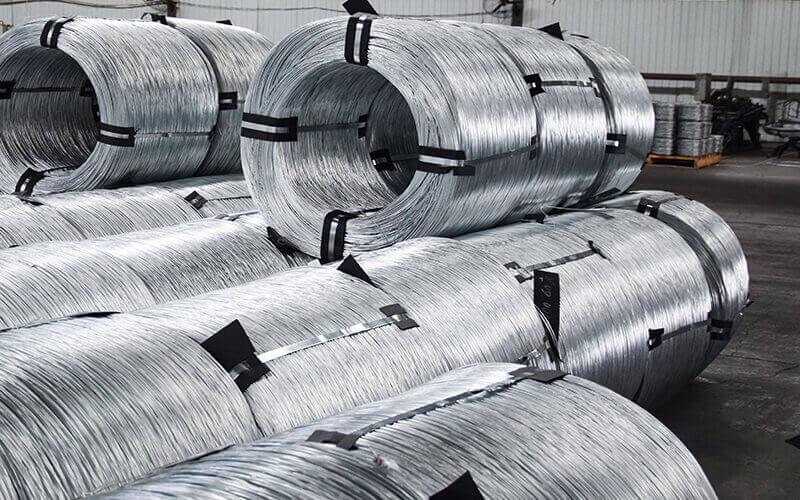
For a project manager, this is a massive ROI multiplier. By paying a marginally higher upfront cost for Galfan (or a polymer-coated unit), you are effectively doubling or tripling the service life of the asset, pushing the replacement window from 20 years out to 60+ years.
This durability is essential, but it is the interaction with water that truly separates gabions from concrete.
2. Permeability: Solving the Hydrostatic Pressure Problem
If you ask a geotechnical engineer what causes retaining walls to fail, the answer is rarely the weight of the soil—it is the water trapped in the soil. When it rains, water accumulates behind a retaining wall, creating hydrostatic pressure that pushes against the back of the structure.
Concrete walls are impermeable dams. To prevent them from blowing out, engineers must design complex drainage systems using gravel packs, perforated pipes, and weep holes. If these weep holes clog (which they often do over decades), pressure builds up until the wall fails.
Gabions completely bypass this failure mode. The structure itself is a drain. With 30% to 40% void space between the stones, gabions allow water to flow freely through the wall. This breaks the hydrostatic pressure immediately, ensuring that the wall only has to resist the earth pressure, not the water pressure. This permeability creates a “free-draining” system that is inherently safer and more stable during heavy rainfall events.

Of course, a stable wall is useless if it takes too long to build. This brings us to the logistics of construction.
3. Installation Speed: Compressing the Critical Path
In construction, time is the most expensive commodity. Every day a site is active involves overhead costs: equipment rental, security, traffic management, and project management fees.
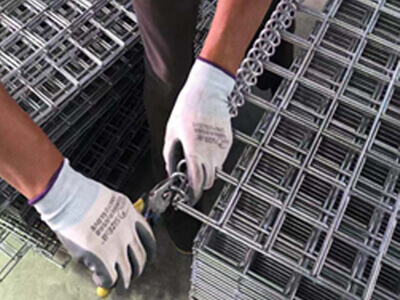
Gabion construction is remarkably fast because it is a dry, mechanical process. The baskets are delivered flat-packed. The crew unfolds them, laces them together, and fills them with stone. There is no waiting for concrete trucks, no testing of slump, and most importantly, no “curing time.”
A concrete wall cannot be backfilled until it reaches a certain strength, which can take weeks. A gabion wall is fully load-bearing the moment the lid is wired shut. For highway projects or emergency repairs where a road must be reopened quickly, this ability to build and immediately backfill can shave weeks off the schedule, directly reducing the project’s indirect costs.
Speed is critical, but what happens when the ground conditions are less than ideal?
4. Soil Tolerance: Surviving Differential Settlement
We touched on flexibility earlier, but it is worth a deeper look. Many infrastructure projects take place on marginal land—soft clays, reclaimed soil, or areas prone to seismic activity.
Building a rigid structure on soft soil requires massive investment in foundation improvements, such as piling or soil replacement. If you don’t do this, and the ground under one end of a concrete wall sinks two inches, the wall will snap.
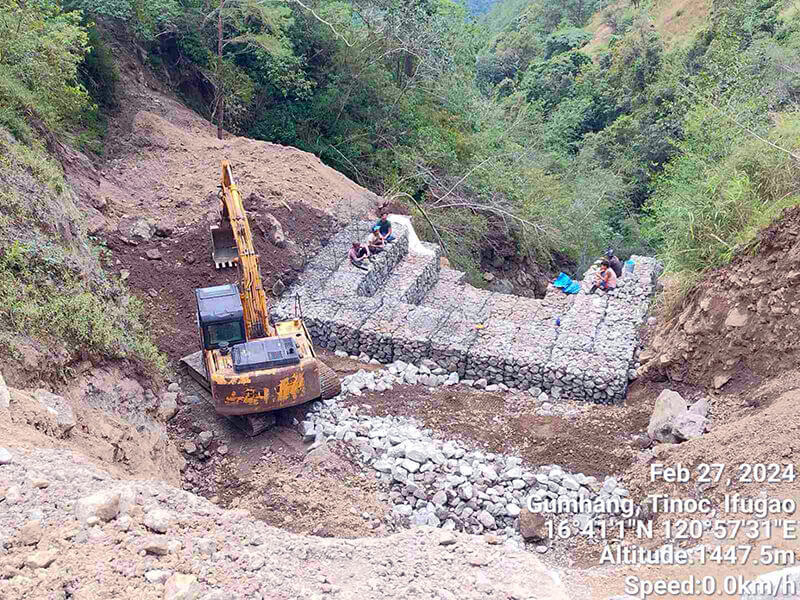
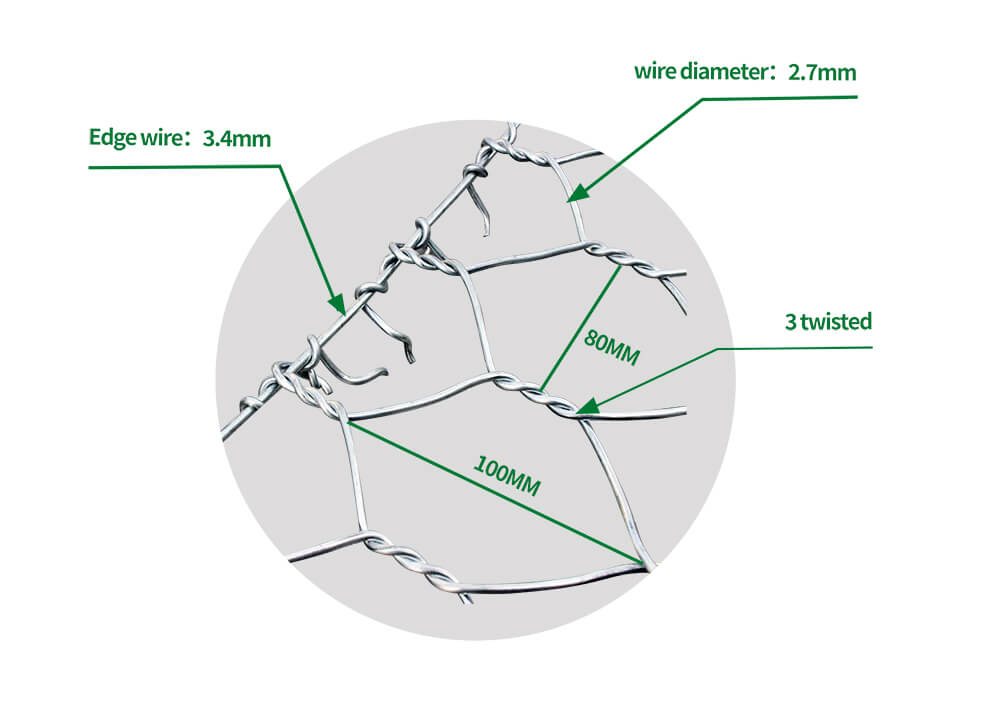
Gabions are soil-tolerant. Because the mesh is a double-twisted hexagonal weave, it has mechanical “give.” If the ground settles, the gabion mattress or wall simply flexes to conform to the new profile. The structural integrity remains intact because the wire mesh distributes the tension loads throughout the unit. This allows engineers to specify gabions in areas where rigid foundations would be prohibitively expensive or technically impossible to construct.
This adaptability to the natural environment extends beyond just mechanics; it also applies to environmental compliance.
5. Eco-Compliance: Meeting Modern Environmental Standards
The days of pouring concrete channels and turning rivers into sterile chutes are ending. Modern environmental agencies demand solutions that support local ecology.
Gabions are one of the few structural solutions that are “bio-engineered.” Initially, they act as a hard-armor rock structure. However, because they are permeable and filled with natural stone, they collect sediment over time. This sediment allows vegetation to take root. Within a few years, a gabion wall can be completely colonized by local plant life, turning a grey structure into a green one.
For procurement, this is a key selling point. Using gabions can help projects earn credits in green building frameworks (like LEED) and simplify the permitting process with environmental agencies that prefer “soft” engineering solutions over hard concrete.

While function usually dictates form in civil engineering, the visual aspect is becoming increasingly important.
6. Aesthetic Versatility: From Industrial to Architectural
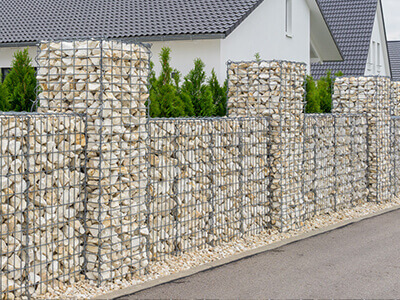
Gabions have crossed the divide from purely functional infrastructure to architectural features. We are seeing a surge in demand for welded mesh gabions in commercial and residential developments.
Unlike the double-twisted mesh used for heavy civil works, welded mesh is rigid and holds a perfect shape. When filled with high-quality, color-matched stone, it creates a clean, modern facade that architects love. We see these used for sound barriers, park benches, and cladding for buildings.

This versatility means that a single supplier (like Shengsen) can provide the heavy-duty retaining walls for the service road and the high-end aesthetic walls for the visitor center, streamlining your procurement process.
But sometimes, aesthetics take a backseat to urgency.
7. Rapid Deployment: The Ultimate Emergency Solution
When a river breaches its banks or a slope collapses onto a railway line, the engineering priority shifts to immediate stabilization. You cannot wait for a dry season to pour concrete.
Gabions are the go-to solution for emergency works. Sack gabions and standard baskets can be pre-filled in a staging area and lifted by crane directly into the water or onto a sliding slope. They provide immediate mass and friction to stop erosion or slope movement.
Because they are porous, they don’t block the water flow (which could cause flooding elsewhere); they simply slow it down and stabilize the soil. This capability makes gabions an essential inventory item for municipal maintenance depots preparing for flood seasons.
And once the emergency is over, how do you handle future growth?
8. Modular Scalability: Phased Construction Made Simple
Infrastructure needs change. A retaining wall built today might need to be higher or longer ten years from now.
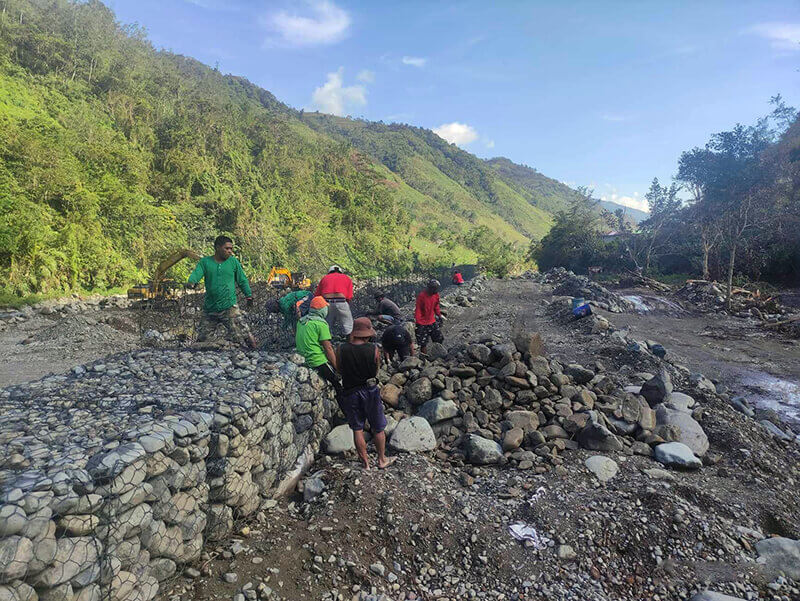
Expanding a reinforced concrete wall is a nightmare of drilling dowels, exposing rebar, and creating “cold joints” that are structurally weak. Gabions, by contrast, are modular blocks. To extend a gabion wall, you simply wire new baskets onto the existing ones. The mesh allows for a seamless structural connection between the old phase and the new phase.
This modularity is particularly useful for cash-strapped municipalities that need to build infrastructure in phases as budget becomes available.
9. Acoustic Dampening: Reducing Noise Pollution
As highways encroach closer to residential areas, noise pollution becomes a regulated issue. Concrete walls are hard surfaces; they reflect sound waves, bouncing the noise of traffic further down the valley or into neighboring buildings.
Gabion walls have a rough, irregular surface and a porous interior. This texture diffuses sound waves, breaking them up, while the air voids inside the wall dampen the vibration. In Europe, gabion walls are frequently specified as acoustic barriers because they can reduce noise levels by several decibels compared to smooth concrete, providing a quieter environment for nearby communities.
Finally, we must consider the long-term ownership of the asset.
10. Zero-Maintenance: The “Set and Forget” Advantage
Every asset owner fears the maintenance budget. Concrete requires sealing, crack injection, and graffiti removal. Steel sheet piles require cathodic protection to stop rusting.
Gabions are virtually maintenance-free. Once the vegetation establishes itself, the root systems actually reinforce the soil, making the structure stronger over time. If a basket does suffer mechanical damage—perhaps struck by a vehicle—repair is localized. You cut out the damaged mesh, re-pack the stone, and lace in a patch panel. You don’t have to demolish the whole wall.
For a procurement manager, this “set and forget” attribute is the final piece of the value puzzle, ensuring that the low upfront cost doesn’t balloon into high operational costs later.
Detailed Cost Analysis: The Financial Argument
We have touched on costs throughout the benefits, but it is helpful to look at the financial comparison in a structured narrative.
When you price a Reinforced Concrete (RC) Wall, you are paying for four distinct categories:
- Materials: Concrete, steel rebar, and drainage gravel.
- Formwork: Timber or steel shutters (often 15-20% of the total cost).
- Specialized Labor: Carpenters for forms, steel fixers for rebar, and finishers for the concrete.
- Foundation Works: Deep excavation and often piling.
When you price a Gabion Wall, the structure changes:
- Materials: Wire mesh and stone.
- Labor: General construction labor (no specialized carpentry or steel fixing required).
- Equipment: A standard excavator and hand tools.
The “Hidden” Savings
The most significant savings often come from the stone. If your project site has suitable rock available from excavation, you can crush and screen it to fill the gabions. This effectively makes your primary building material free, eliminating the cost of importing concrete and exporting spoil.
Furthermore, because gabions are flexible, the foundation preparation is minimal—usually just a compacted layer of gravel rather than a deep frost footing. When you aggregate these savings—material, labor, schedule, and foundation—gabions typically come in at 20% to 40% less expensive than a comparable concrete structure.
However, realizing these savings requires buying the right gabions.
B2B Sourcing Guide: How to Buy Quality
The gabion market is flooded with products that look identical but perform very differently. As a procurement professional, you need to know which levers to pull to ensure you are getting a civil-grade product.
1. Verify the Standard (ASTM & EN)
Never issue a generic tender for “gabion boxes.” You must reference the governing standards.
- For North American projects, specify ASTM A975. This standard dictates the minimum tensile strength of the wire and the mesh itself. It ensures that the mesh won’t burst under the weight of the stone.
- For European or international projects, specify EN 10223-3.
Requesting a mill certificate that explicitly references these standards is the first step in filtering out low-quality agricultural mesh.
2. Mesh Type: Woven vs. Welded

We cannot stress this enough: choose the mesh based on the application.
- Double-Twisted (Woven) Mesh is designed for structural applications (retaining walls, riverbanks). The twist allows the mesh to articulate. If a wire is cut, the twist prevents the mesh from unraveling.
- Welded Mesh is rigid. It is excellent for architectural faces and low-height landscaping walls where straight lines are required. It is not recommended for high-movement environments unless specifically engineered for it.
3. Coating Specification
Your environment dictates your coating.
- Class 3 Zinc (Galvanized): Suitable for dry, rural environments with low pollution.
- Galfan (Zn-Al): The baseline for modern civil infrastructure. It offers superior performance for a fractional cost increase.
- PVC/Polymer: Mandatory for coastal zones, saltwater applications, or industrial areas with acidic soil. Ensure the specification calls for “fuse-bonded” or high-adhesion polymer to prevent peeling.
4. Logistics and Handling
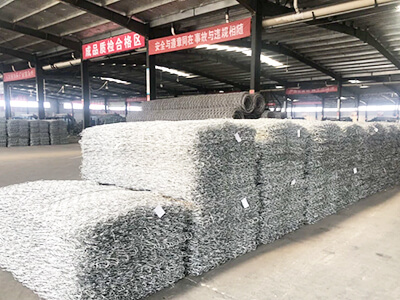
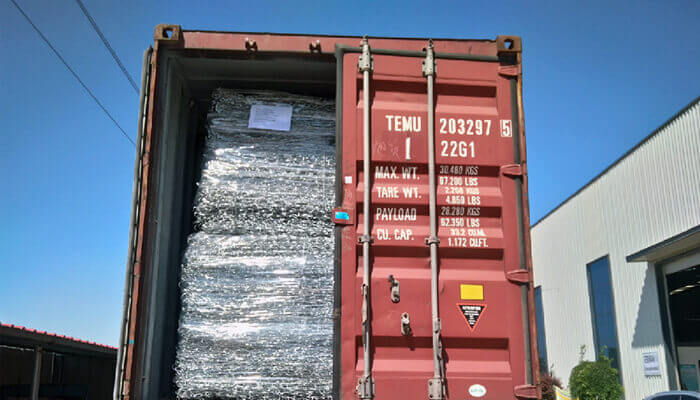
Finally, consider how the product arrives. Gabions are voluminous but light. A good manufacturing partner (like Shengsen) will maximize container loading by compressing and folding the units into tight bundles.
This reduces your freight cost per unit. Standardizing your sizes (e.g., sticking to 2x1x1m units) also helps in logistics, allowing for easier stacking and inventory management on site.
FAQ: Common Procurement & Engineering Questions
What is the life expectancy of a PVC-coated gabion in marine environments?
When specified correctly (Zn-Al core wire + quality Polymer sleeve), these units can exceed 60+ years of design life, provided the coating is not mechanically damaged during installation.
How does stone fill size impact the mesh aperture selection?
The stone size (D50) must be larger than the mesh opening (D) to prevent loss of fill. For standard 80x100mm mesh, stone should generally be in the 100mm–200mm range. Using undersized stone causes internal erosion and structural settlement.

Can gabion baskets be customized for specific site dimensions?
Yes, but it adds cost. While manufacturers like Shengsen can produce custom dimensions for bulk orders, it is often more economical to use standard modules and cut/fold units on-site to fit irregular geometries.
Do gabion walls require a concrete foundation?
Typically, no. They require a compacted granular base or a prepared foundation soil. However, in soft soils, a geotextile separator or a thin “mud slab” may be used to facilitate assembly, but the structure relies on gravity, not a rigid footing.

Conclusion: Partnering for Project Success
The transition from rigid concrete to flexible gabion systems is not just a trend; it is a rational engineering response to the need for cost-effective, resilient, and sustainable infrastructure.
By choosing gabions, you are solving drainage problems before they start, reducing your project’s carbon footprint, and insulating your budget against the high costs of skilled labor and specialized equipment.
However, the success of a gabion project relies on the quality of the mesh. A failed retaining wall is a liability no project manager wants to face.
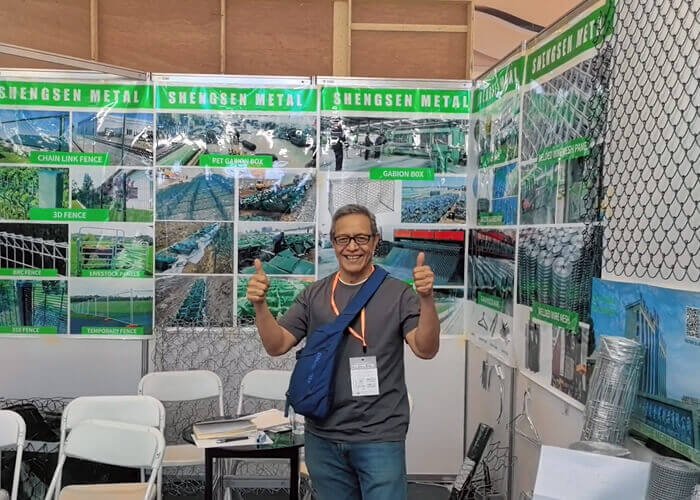
At Shengsen Gabion, we specialize in manufacturing ASTM and EN-compliant gabion systems for the global market. We don’t just sell wire; we help you optimize your shipping, select the right coating for your soil chemistry, and ensure your project stands the test of time.
Is your next project ready for a flexible solution?
Contact our engineering team today to request a quote, view our factory certifications, or discuss the specific geotechnical challenges of your site. Let’s build something that lasts.
You May Also Interested