Gabion Basket Dimensions: The Complete Size Reference
Last Updated: July 10, 2026
The Quick Answer: Standard Industry Sizes
Need the most common gabion basket dimensions right now? The vast majority of global projects use just two sizes:
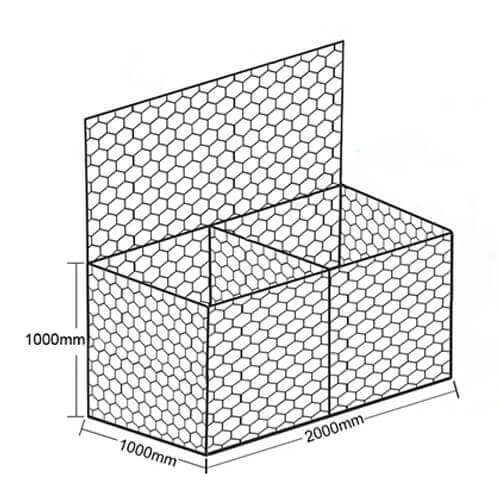
- 2 × 1 × 1 meters (approx. 6 × 3 × 3 ft)
- 3 × 1 × 1 meters (approx. 9 × 3 × 3 ft)

If one of those fits your quote, you are already on the right track.
Those two gabion basket sizes cover most retaining walls and landscaping projects. However, exact dimensions still matter. You have to match the structural product to your site’s specific engineering demands.
Navigating metric and imperial standards can be a headache. But getting the specs right the first time is crucial. It prevents structural failures, wrong quotes, and expensive on-site delays.
Below is your complete guide to gabion sizing. First, let’s make sure you are quoting the correct product category.
Gabion Basket vs. Reno Mattress: Which One Do You Need?
Before we talk sizes, it’s worth pausing here for a second, because this is where orders sometimes go sideways.
“Gabion” actually covers a small family of products, and they’re not interchangeable. Quoting the wrong one doesn’t just cost time — it can mean the end client’s gabion wall doesn’t hold, or their riverbank doesn’t stay protected.
Here’s the difference, in plain terms:
Gabion Basket (Box)
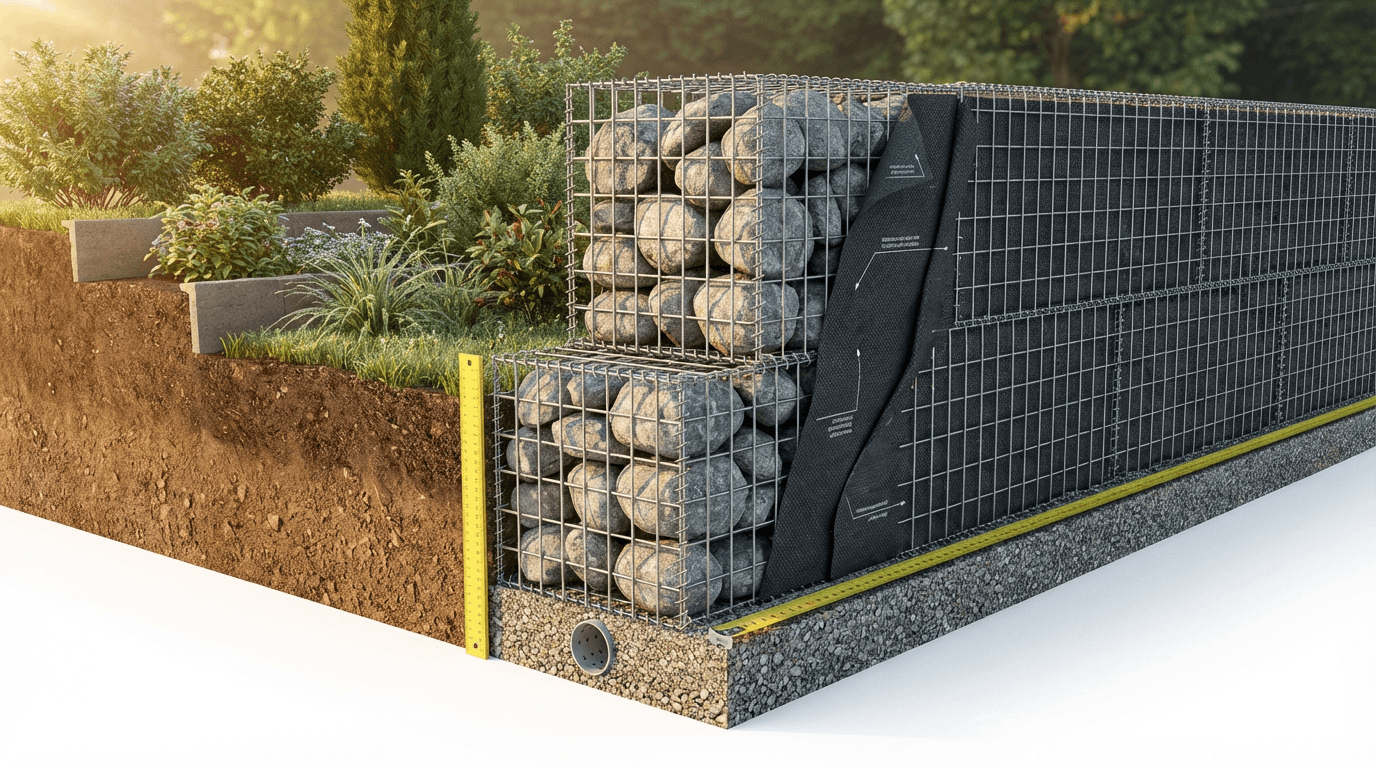
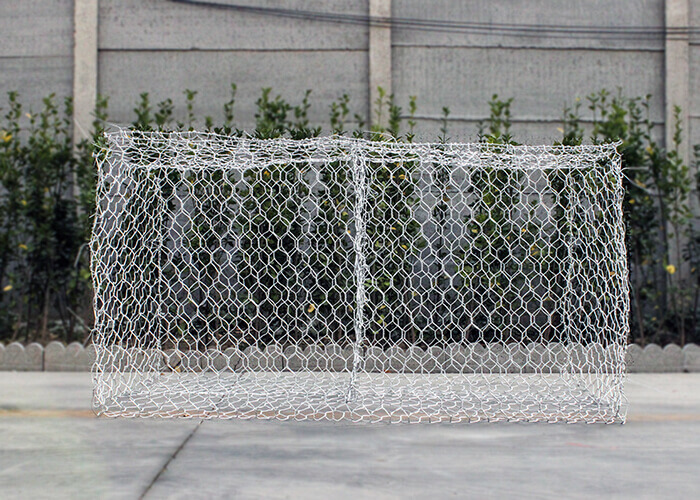
The classic structural product — tall, sturdy, and built to stack. If the project involves a retaining wall, this gabion box is almost always the answer. Heights run from 0.5 m to 1.5 m.
Reno Mattress
Think of this as the basket’s flatter, wider cousin. It’s not meant to stack — it’s meant to lie down and cover ground, which makes it ideal for lining riverbanks and channels. Reno mattress heights are much shorter, just 0.17 m to 0.30 m.

A simple way to remember it: baskets stand up, mattresses lie down. A project needing height and structural strength wants a basket. A project needing to cover a wide, flat area wants a mattress.
Gabion Basket Sizes Chart: Metric and Imperial
Once you know roughly what you need, use these tables to double-check the exact dimensions and volume.
Metric Gabion Basket Sizes
| Size (L × W × H) | Volume | Best For |
| 1 × 1 × 0.5 m | 0.5 m³ | Small retaining walls, decorative facing |
| 1 × 1 × 1 m | 1.0 m³ | Small retaining walls, landscaping |
| 1.5 × 1 × 1 m | 1.5 m³ | Mid-size walls, fence bases |
| 2 × 1 × 0.5 m | 1.0 m³ | Low retaining walls, terracing |
| 2 × 1 × 1 m ⭐ | 2.0 m³ | The most common civil engineering size |
| 3 × 1 × 0.5 m | 1.5 m³ | Long low walls, scour protection |
| 3 × 1 × 1 m ⭐ | 3.0 m³ | The other most common civil engineering size |
| 4 × 1 × 1 m | 4.0 m³ | Heavy-duty walls, mass gravity structures |
| 4 × 2 × 0.5 m | 4.0 m³ | Wide low walls, large scour aprons |
| 4 × 2 × 1 m | 8.0 m³ | Industrial or large hydraulic works |
⭐ These two sizes cover the majority of projects worldwide — and it’s not a coincidence. The 1 m height is easy to lift by crane, the 1–2 m width is comfortable for two or three workers filling by hand, and the 2–3 m length keeps the number of joints in a wall low.
Imperial Gabion Basket Sizes (U.S.)
The industry uses simple letter codes for these — handy to know if a supplier ever quotes you “a Type A” or “a Type C.”
| Code | Size (L × W × H) | Volume | Metric Equivalent |
| A | 6 × 3 × 3 ft | 2.0 yd³ | ~1.83 × 0.91 × 0.91 m |
| B | 9 × 3 × 3 ft | 3.0 yd³ | ~2.74 × 0.91 × 0.91 m |
| C | 12 × 3 × 3 ft | 4.0 yd³ | ~3.66 × 0.91 × 0.91 m |
| D | 6 × 3 × 1.5 ft | 1.0 yd³ | ~1.83 × 0.91 × 0.46 m |
| E | 9 × 3 × 1.5 ft | 1.5 yd³ | ~2.74 × 0.91 × 0.46 m |
| F | 12 × 3 × 1.5 ft | 2.0 yd³ | ~3.66 × 0.91 × 0.46 m |
A quick note that saves a lot of confusion later: when a U.S. spec calls for a 6 × 3 × 3 ft basket, the metric equivalent people actually order is 2 × 1 × 1 m, not the exact 1.83 × 0.91 × 0.91 m conversion. That small gap is just rounding to a standard size — not a change in engineering.
Reno Mattress Sizes (Metric)
| Size (L × W × H) | Volume | Typical Use |
| 3 × 2 × 0.17 m | 1.02 m³ | Low-flow channel lining |
| 4 × 2 × 0.17 m | 1.36 m³ | Standard channel protection |
| 5 × 2 × 0.17 m | 1.70 m³ | Standard riverbank |
| 6 × 2 × 0.17 m ⭐ | 2.04 m³ | The most common mattress size |
| 6 × 2 × 0.23 m | 2.76 m³ | Higher-velocity channels |
| 6 × 2 × 0.30 m ⭐ | 3.60 m³ | Scour aprons, drop structures |
How to Choose the Right Gabion Size by Project Type
This is the section that matters most, so let’s go project by project. Find the one closest to what you’re quoting to see the standard specs.
Residential Retaining Walls (Under 3 m)
2 × 1 × 1 m | Standard Galvanized
This is the true workhorse size. The 1 m height makes hand-filling easy, and standard galvanized coating holds up perfectly well for typical, non-corrosive residential soil.
Civil & Highway Retaining Walls (3–6 m)
2 × 1 × 1 m or 3 × 1 × 1 m | Galfan or Zn-Al-Mg
At this scale, the project is likely an engineered wall. They utilize standard civil sizes but require upgraded coatings to meet strict DOT (Department of Transportation) service-life requirements.
Large Gravity Walls (6–10 m)
4 × 2 × 1 m (stepped base) and 3 × 1 × 1 m (top) | Galfan or Zn-Al-Mg
Massive walls need a massive footprint to prevent sliding. The 4-meter-wide base gives the wall the mass it needs, while the 3-meter baskets build the height. Premium coating is mandatory for structures this large.
Bridge Abutments
2 × 1 × 1 m or 3 × 1 × 1 m | PVC-Coated
Bridge sites are notorious for harsh hydraulic exposure and contaminated road runoff. The PVC layer provides an essential barrier against constant moisture and corrosive salts.

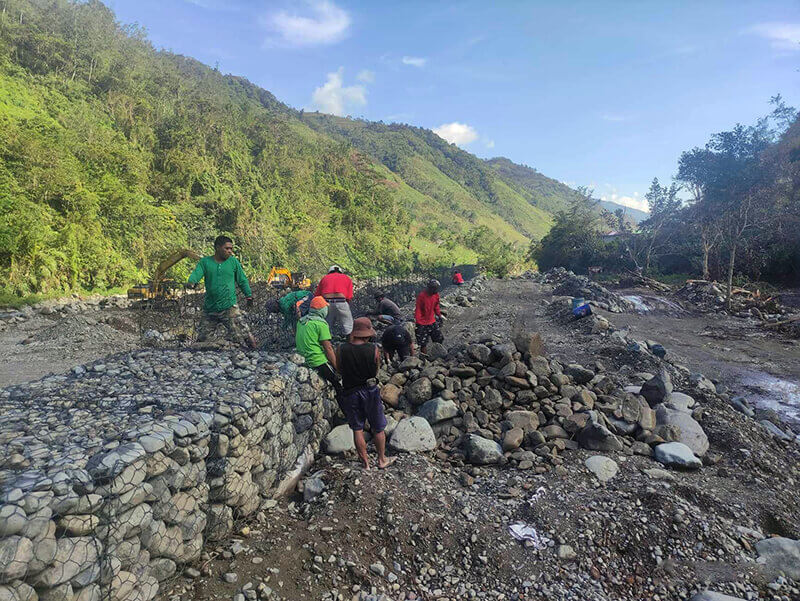
Riverbank Protection
6 × 2 × 0.23 m or 6 × 2 × 0.30 m (Reno Mattresses)
A gentle reminder here: mattresses are meant to flex with the bank, not carry vertical load. If a project spec calls for a mattress taller than 0.30 m, what it actually needs is a standard basket.
Coastal & Sea Wall Projects
2 × 1 × 1 m | PVC-Coated or Stainless Steel
Salt and UV exposure will eat through standard galvanized mesh in just 10–15 years near the coast. In marine environments, PVC or stainless steel is a strict requirement, not a luxury upgrade.
Mining & Tailings Dams
Custom 4 × 1 × 1 m or 5 × 1 × 1 m | Heavy Galvanized
At the volumes mining projects move, every crane lift adds up. Custom, larger baskets mean fewer lifts and significantly faster installation progress across vast sites.
How to Calculate Gabion Basket Stone Tonnage
Once your basket size is settled, the next question is almost always: how much rock do I need to fill it?
Here’s the simple version.
Step 1 — Know your rock’s density.
| Rock Type | Density |
| Granite / basalt | 1.6 – 1.9 t/m³ |
| Limestone | 1.5 – 1.7 t/m³ |
| Quartzite / sandstone | 1.5 – 1.6 t/m³ |
| River rock (mixed) | 1.55 – 1.65 t/m³ |
| Recycled concrete | 1.4 – 1.5 t/m³ |
(These numbers reflect stone as it settles inside the basket, with natural gaps between the pieces — not the density of a solid block of rock.)
Step 2 — Multiply by your basket’s volume.
Using granite at 1.65 t/m³ as an example:
- 2 × 1 × 1 m → about 3.3 tonnes
- 3 × 1 × 1 m → about 5.0 tonnes
- 4 × 1 × 1 m → about 6.6 tonnes
- 2 × 1 × 0.5 m → about 1.65 tonnes
- 6 × 2 × 0.3 m mattress → about 5.9 tonnes
Step 3 — Add a buffer.
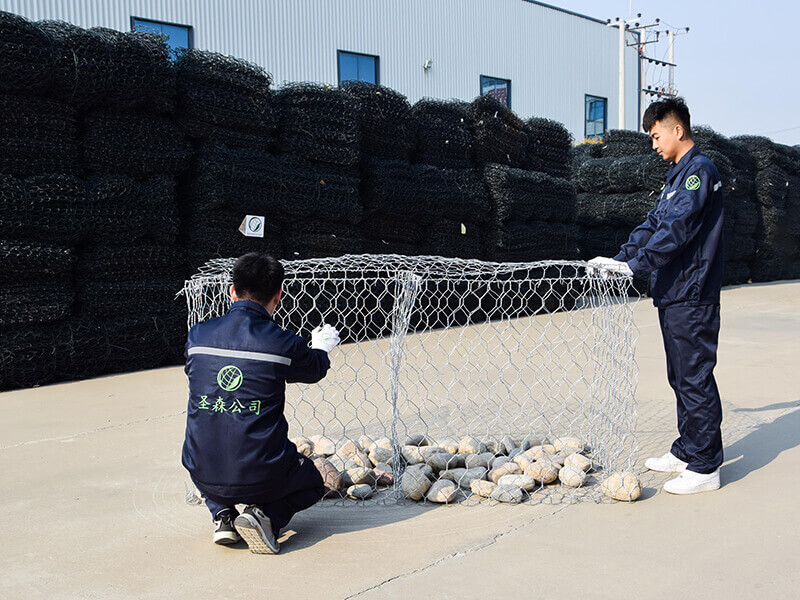
Stone never fills a basket perfectly — there are always small gaps. Hand-placed stone usually reaches 90–95% density; machine-placed can be a bit less. So it’s always worth adding 10% to your order. Running short of stone mid-project is a headache nobody needs.
How Many Gabion Baskets Fit in a Shipping Container?
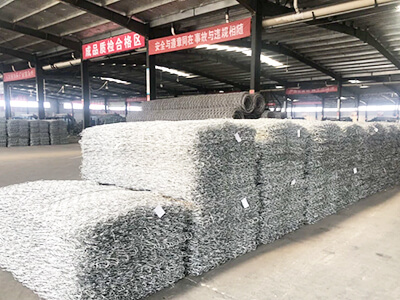
Fully assembled baskets take up a lot of container space, which is why almost no one ships them that way. As a reference point, assembled 2×1×1 m baskets run roughly 9–14 per 20 ft container and 22–34 per 40 ft HC — but that’s not how we ship, and it’s not how most of the industry ships either.
We ship compressed, flat-packed gabions, and the real numbers look very different:
- 20GP container: around 500–600 sets
- 40HQ container: around 1,600–1,800 sets
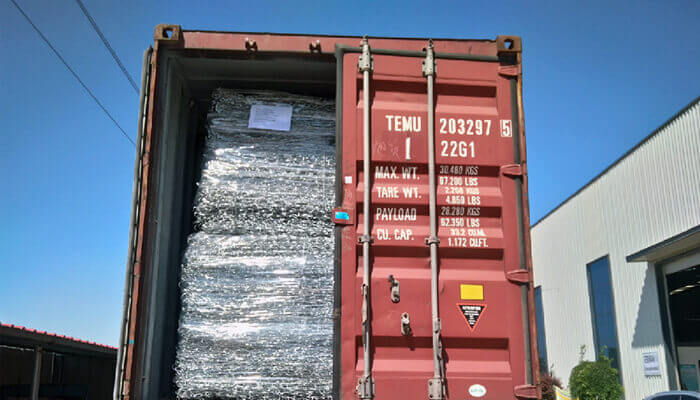
That’s the difference flat-packing makes — several times the loading density of assembled baskets, on the same container.
The trade-off is straightforward: a bit of assembly labor once the baskets reach the jobsite, in exchange for dramatically lower freight cost per unit. For any order beyond a handful of baskets, flat-pack is almost always the right call.
Gabion Wire Mesh and Coating Standards
You don’t need to become an expert here, but a few basics will help you ask your supplier the right questions.
Coating Matters More Than People Expect
| Coating | Service Life | Best For |
| Galvanized (Zn) | 30–40 years inland | Standard inland projects |
| Galfan (Zn-5%Al-MM) | 40–60 years | Marine or saline environments |
| Zn-Al-Mg (zinc-aluminum-magnesium alloy) | 50–70+ years | High-corrosion sites needing top-tier durability |
| PVC-coated (over galvanized) | 50+ years | Aggressive water, chemical exposure, sea walls |
| Stainless steel (304/316) | 75+ years | Highly corrosive, premium applications |
If your project is anywhere near saltwater, brackish water, or industrial runoff, it’s worth spending a little more here on the gabion wire. The basket itself is the cheap part of the project — replacing a corroded wall later is not.
Zn-Al-Mg is worth calling out on its own, since it’s newer to the market and not every buyer has come across it yet. The magnesium in the alloy forms a denser, more self-healing oxide layer than standard galvanizing or even Galfan, which is why it holds up so well in aggressive environments — often outperforming Galfan at a similar coating weight.
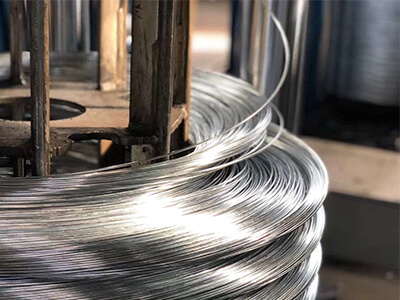
We stock this wire and it’s becoming a popular upgrade pick for coastal and high-corrosion projects where PVC coating isn’t preferred for aesthetic or handling reasons.
Mesh Openings, In Case You’re Asked
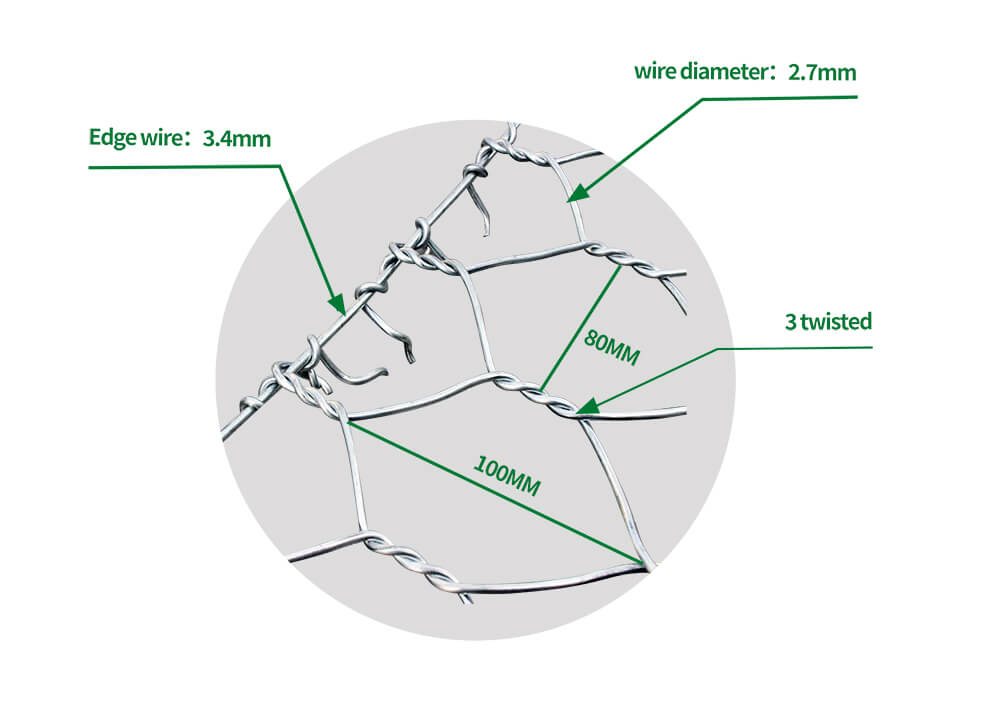
- 8 × 10 cm — the standard for most civil engineering work
- 6 × 8 cm — finer, used for architectural work and smaller stone
- 10 × 12 cm — coarser, for large rock or mattress applications
Which Standard Applies to You
- United States → ASTM A975 (mesh) and ASTM A641 (coating)
- European Union → EN 10223-3 (mesh) and EN 10244-2 (coating)
- China → GB/T 20492
- India → IS 16014
- Brazil → ABNT NBR 8964
If you’re working with a government or DOT project in the U.S., it’s also worth knowing about NRCS Construction Specification 464 — it’s the most detailed public reference available, and a good benchmark even outside federal projects.
Gabion Stacking and Installation Rules
These simple rules will save you real headaches on-site and prevent structural failures down the road.
Keep Lengths Under 4 m (12 ft)
Anything longer becomes extremely difficult to fill evenly and keep straight, even with heavy equipment.
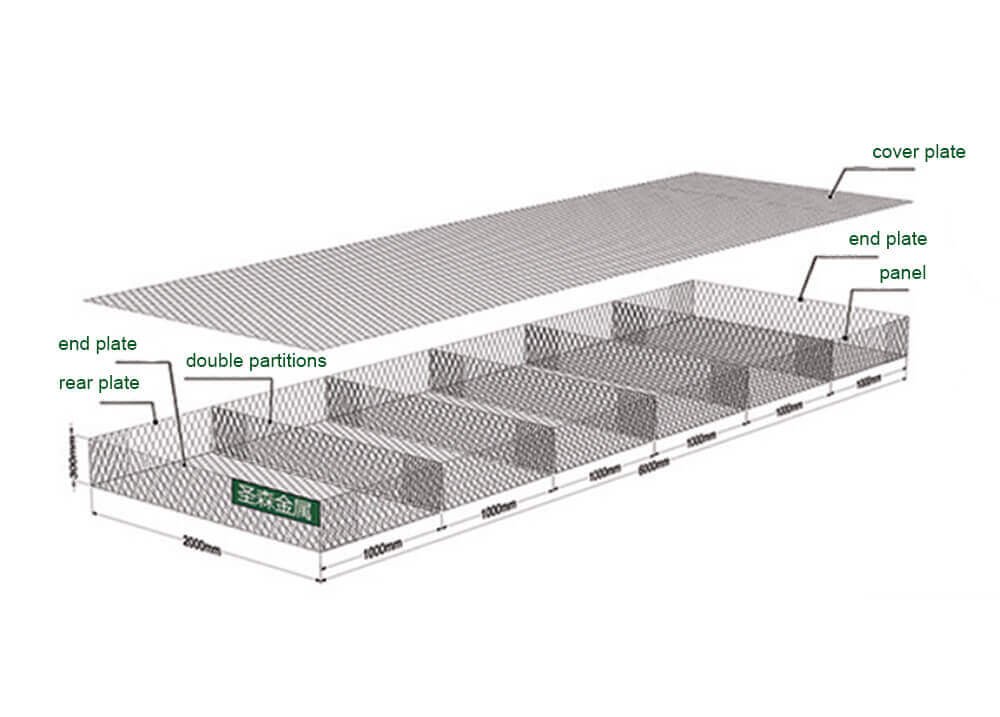
Install Diaphragms Every 1 m
These internal dividers are mandatory for any basket longer than 1 m. Without them, the front and back panels will bulge out under the massive weight of the stone.
Limit Stack Height to 3 m
Once a wall exceeds 3 meters tall, the soil pressures require an engineering review. You will usually need a stepped base (a wider foundation) or geogrid reinforcement to keep it stable.
Lace Edges Every 100–150 mm
Lacing wire is what structurally locks the baskets together. Skimping on the spacing is the number one reason joints burst open under load.

Build a 6°–10° Backward Lean
Never build a retaining wall perfectly dead-plumb. Angling the wall slightly back into the slope (called a batter) shifts the center of gravity and massively improves long-term stability.
Custom Gabion Basket Sizes
Custom sizes are common for projects with non-standard dimensions. Just keep two things in mind:
Manufacturing Tolerances Exist
Standard manufacturing allows about ±5% variation, so a “2 m” basket might measure anywhere from 1.9 to 2.1 m. It’s worth checking actual dimensions when your shipment arrives, especially if your project has tight tolerances.
Custom Sizes Take Longer to Produce

Standard sizes typically ship in 2–4 weeks. Custom sizes need 4–8 weeks for tooling and production. If your timeline is tight, standard sizes are almost always the safer choice — the savings from a custom spec rarely outweigh the schedule risk.
Common Mistakes When Ordering Gabion
A little foresight here goes a long way:
Mixing Up Baskets and Mattresses
A basket that’s 1 m tall is not a “mattress” — even if it looks similar in a photo.
Confusing Metric and Imperial Specs
A 2×1×1 m basket and a 6×3×3 ft basket are close, but not identical. Confirm which standard your project actually calls for.
Skipping Diaphragms on Baskets Over 1 m
This is the single most common fabrication mistake we see — and it’s an easy one to avoid.
Using the Wrong Coating for the Environment
Standard galvanized doesn’t hold up near water or in acidic soil. Galfan, Zn-Al-Mg, or PVC coating is worth the extra cost there.
Underestimating the Stone Order
Always add that 10% buffer to your stone order. It’s a small addition that prevents a much bigger problem later.
FAQ: Gabion Basket Sizes
What are the most common gabion basket sizes?
For most retaining walls and civil engineering projects, the global standard is the 2 × 1 × 1 m (approx. 6 × 3 × 3 ft). The next most common is the 3 × 1 × 1 m (approx. 9 × 3 × 3 ft). If you are building a standard wall, you will almost certainly be using one of these two.
What size stone should I use to fill a standard basket?
Your stone needs to be larger than the wire mesh openings so it doesn’t fall out, but small enough to pack tightly together. For standard 8 × 10 cm mesh, the ideal rock size is typically between 100 mm and 200 mm (4 to 8 inches).
How much does a standard 2 × 1 × 1 m basket weigh when full?
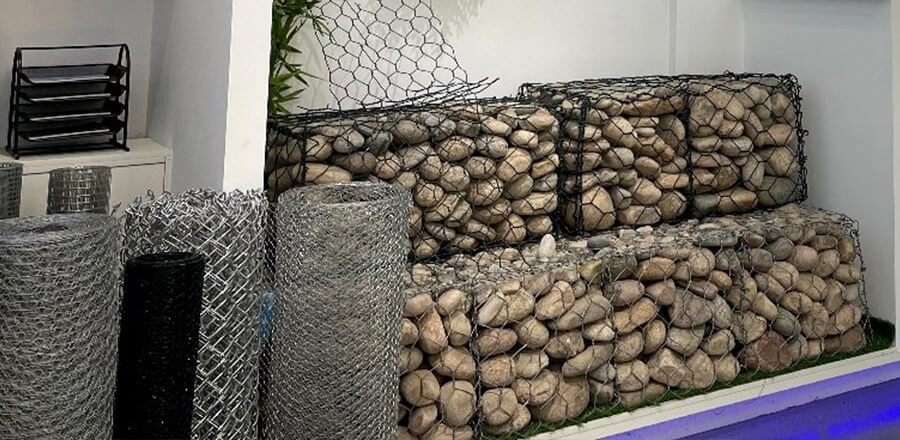
An empty 2 × 1 × 1 m basket is easy to carry by hand (weighing roughly 15–20 kg, depending on wire gauge). However, once filled with standard dense rock, that same basket will weigh roughly 3.3 metric tonnes (over 7,200 lbs).
Can I cut or resize a gabion basket on-site if it’s too long?
Technically, yes, but it is not recommended. You can cut woven mesh, fold it, and re-lace it, but doing so removes the reinforced factory selvedge wire and can weaken the structure. Instead of cutting, it is much safer to overlap two empty baskets to fit a smaller space, or simply order a custom size.
What are the largest and smallest standard sizes available?
The smallest standard woven basket is typically 1 × 1 × 0.5 m (0.5 m³), which is used for low landscape walls. The largest standard size is usually 4 × 2 × 1 m (8.0 m³), primarily used as a mass foundation for massive gravity walls. Anything larger than that is difficult to transport and fill efficiently.
Conclusion
Getting your gabion basket sizes right the first time is the easiest way to keep your project on schedule and under budget. As we’ve covered, it’s not just about picking a wire box—it’s about matching the dimensions, coatings, and structural limits to your site’s specific demands.
If you have your engineering report in hand and know your exact dimensions, you’re ready to order. But if you are still navigating metric conversions, calculating stone tonnage, or deciding between standard galvanized and Zn-Al-Mg coatings, you don’t have to do it alone.
Send us your project details. Whether you need a container full of standard 2 × 1 × 1 m workhorses or a custom-spec order for a highly corrosive environment, our team will help you lock in the right specs and get a competitive quote.
You May Also Interested